


Can the duodenal switch help me lose weight and keep it off?
Do you struggle with your weight? Do you diet and exercise like a champion and lose 50 pounds or even more, only to watch as the scale creeps back up?
It can feel hopeless. But lots of our patients have been right where you are now. Duodenal switch surgery helped them to level the playing field in their struggle with obesity so they could lose weight, keep it off, and regain their quality of life.
With the duodenal switch, you can expect to lose between 85-100% of your excess unhealthy weight. That could mean losing 150 pounds or even more. Imagine how that would feel.
What is loop duodenal switch surgery?
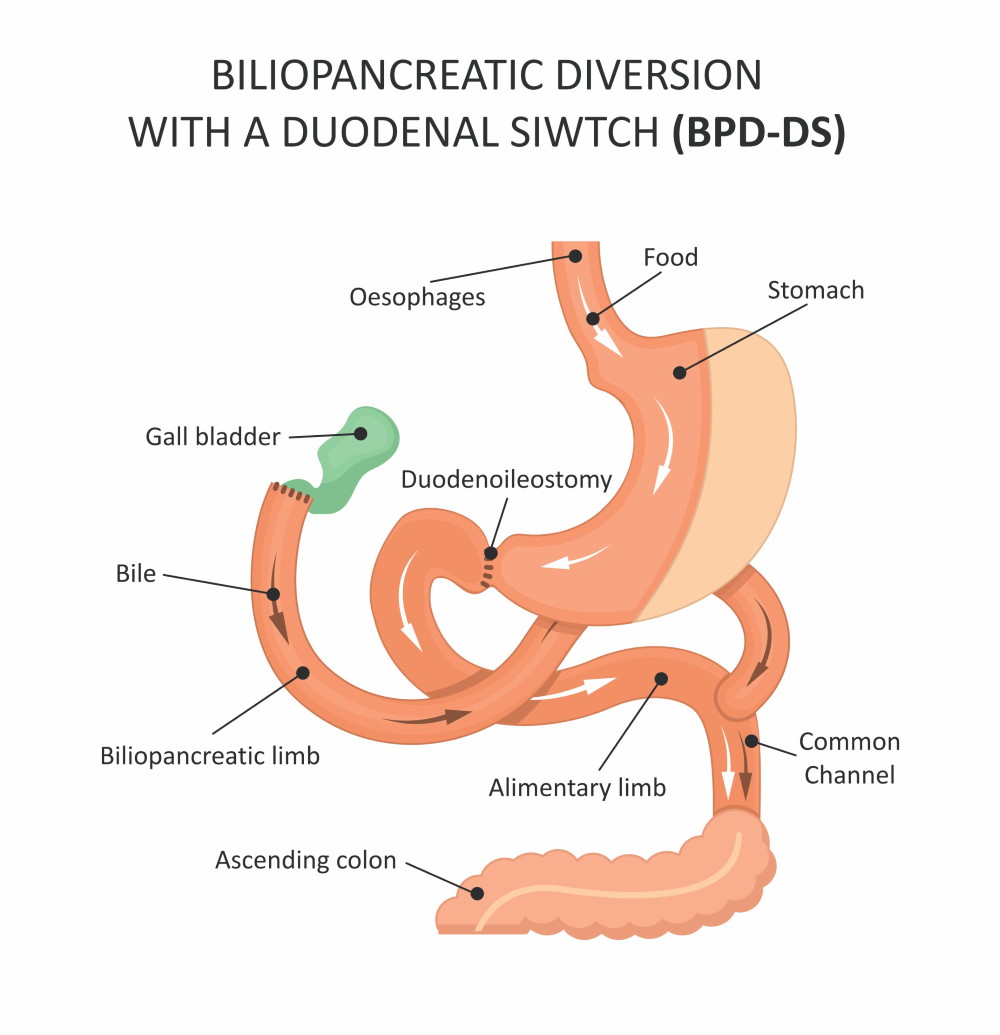
The loop duodenal switch (SADI-S or SIPS) is a recent safe and highly effective modification of the historic duodenal switch (DS) procedure, also known as biliopancreatic diversion with duodenal switch (BPD-DS).
Like the gastric bypass, the SADI-S (SIPS) is both a malabsorptive and restrictive surgery. Restrictive means that the stomach is reduced in size, which restricts the amount of food that you can eat. Malabsorptive surgeries reduce the amount of nutrients that your body absorbs, in this case by reducing the size of the small intestine. The combination of malabsorption and restriction makes loop duodenal switch surgery, like other bariatric surgeries, extremely effective at enabling our patients to lose weight and keep it off. We offer duodenal switch surgery to patients in the Denver Metro area and beyond.
According to a study by the National Institutes of Health, the duodenal switch is the most effective bariatric surgery if you suffer from a body mass index (BMI) over 50.
How is duodenal switch surgery done?
This surgery involves removing about 85% of your stomach by forming a sleeve gastrectomy on top. This reduces the amount of food that you can consume at one time. In addition, just after the sleeve portion, the first portion of the small intestine immediately after the stomach (called the duodenum) is divided and brought in a loop of small intestines up to the stomach to bypass about half of the small intestines. This reduces the amount of calories that can be absorbed (as well as the amount of fat) even more than the bypass.
What are the SADI-S and SIPS procedures?
The SADI-S (Single Anastomosis Duodeno-Ileal bypass with Sleeve gastrectomy) and SIPS (Stomach Intestinal Pyloris Sparing surgery) are both commonly used medical acronyms that refer to the loop duodenal switch.

How is today's loop version different from traditional DS?
The traditional procedure, called the biliopancreatic diversion with duodenal switch (BPD-DS) or the gastric reduction duodenal switch (GR-DS) involved bypassing more than 80% of a person’s small intestines. While this operation led to high weight loss, a subset of patients suffered persistent vitamin or protein malnutrition in spite of supplementation. This was because too much of the small intestine was removed, limiting patients’ ability to absorb crucial vitamins and proteins.
Today our Denver team performs a loop version of this operation (SADI-S or SIPS) that bypasses only about half of the small intestine. Leaving this amount of intestinal length to absorb key nutrients minimizes a person’s risk of vitamin or protein deficiencies while maximizing weight loss in a safe setting.
However, if you are considering this operation as a way to cure type II Diabetes or maximize your weight loss opportunity long-term, you must be very committed to perfect compliance in taking a certain set of vitamins and protein every day for the rest of your life. This is crucial to help you take in adequate vitamins and proteins. With this commitment, the SADI-S (SIPS) operation has been shown to be safe and very effective. With a healthy diet and vitamin supplementation, you can start making the most of everything Denver has to offer.

At-a-glance: Duodenal switch surgery
| Procedure time | 60 - 90 mins |
| Hospital Stay | 1-2 days |
| Recovery time | 2-4 weeks (light activity) |
| Avg. weight loss | 60-80% of excess weight |
| Surgical approach | Minimally invasive (4-5 small incisions) |
| Typical follow-up | 1 week, 1 month, 3 months |
FAQS
What should I expect from duodenal switch surgery?
The primary advantage of loop duodenal switch (SADI-S or SIPS) surgery is that it combines intake restriction (the sleeve portion of the surgery limits the amount of food you can eat) with substantial calorie malabsorption (the rerouting of the intestines reduces absorption of fat and calories). This results in the highest percentage of unhealthy weight loss with the lowest risk of significant weight regain. Patients on average can expect to lose 80-100% of their unhealthy weight over about 9 months.
Another significant advantage of the loop duodenal switch is that this operation is very good at resolving obesity-related health problems such as high blood pressure, obstructive sleep apnea, and high cholesterol. It has the highest success rate of any bariatric surgery in curing Diabetes II.
What is duodenal switch surgery like?
Surgery takes approximately one and a half hours. This will vary based on your past surgical history and anatomy. The typical hospital stay is two nights, so if you’re from outside of the Denver Metro area you may have to make preparations.
This procedure is almost always done laparoscopically through five small incisions in the abdomen. Laparoscopic surgery usually results in a shorter hospital stay, faster recovery, smaller scars, and less pain than open surgical procedures.
What are some duodenal switch complications?
Although unlikely, it is possible for patients after bariatric surgery to suffer minor complications. These complications are usually short-lived and easily fixed.
Complications include incisional pain, infections, obstructions, and excess skin. Here you can find a full list of bariatric surgery complications.
The most common duodenal switch complications are increased acid reflux, nutrient deficiencies, and loose or fatty stools. Dr. Long works hard to minimize these risks. He’ll repair any hiatal hernias you may have in surgery, and may prescribe antacids as needed.
You can minimize the risk of nutrient deficiencies by being very dedicated to a daily regimen of vitamin and mineral supplementation. You can reduce the risk of fatty stools by avoiding eating fatty foods. Both of these activities will actually improve your long-term health.
It’s important to note that at a certified ASMBS comprehensive MBSAQIP center like the BMCC, complications are very rare. Dr. Long is an award-winning bariatric surgeon who personally commits to not leaving the operating room until every surgery is performed as well as humanly possible. At the BMCC, your health is in very safe hands.
What is a duodenal switch diet?
After the duodenal switch, you’ll need to stick to a healthy bariatric surgery diet in order to maximize your weight loss and get your health back. You’ll need to eat multiple small meals per day, consisting of lean protein and fruits and vegetables; and avoid carbs and sugars.
You’ll also need to supplement your duodenal switch diet with a daily vitamin and mineral regimen, in order to avoid malnutrition.
How much pain will I have after surgery?
Any surgical procedures can be painful. However, at the Bariatric and Metabolic Center of Colorado our Denver team utilizes a variety of strategies to minimize pain and in some cases even take away your pain completely. One technique that we are pioneering for our loop DS patients is the use of a TAP block. This uses a long-acting anesthetic that dramatically reduces post-operative pain and the need for pain medication. In fact, after a TAP block, some patients never need any additional pain medication. That means more freedom to get out and enjoy everything Colorado has to offer, sooner.
What kind of follow up will I need after surgery?
After surgery it is vital to follow up with our Colorado office. You will be asked to come in for a 2 week post-operative visit with the surgeon and then a visit with the team at 6 weeks, 3 months, 6 months, one year, 18 months, and annually. Patients who follow up regularly usually do the best at losing weight and keeping it off. If you’re from outside of the Denver area, make sure to plan these trips into your schedule.
How much does a duodenal switch cost?
$20,060

Is SADI-S Surgery right for me?
You may be a good candidate for loop duodenal switch (SADI-S or SIPS) surgery in Colorado if you:
- Have a BMI > 50 or are interested in losing 80-100% of your excess body weight
- Want your best chance of curing type II diabetes (up to 98%)
- Know that you will be extremely dedicated to a life of vitamin and protein supplementation
You may not be an ideal candidate for loop DS surgery in Colorado if you:
- Have current vitamin or mineral deficiencies (including anemia)
- Suffer from Crohn’s disease, a medical condition requiring prednisone or anti-inflammatory medications; or have had many previous abdominal operations
- Struggle with irritable bowel syndrome with frequent diarrhea as the DS can be expected to increase the softness and frequency of your stools
- Have severe reflux (the sleeve portion has been shown to increase reflux after surgery in up to 20% of patients)
Testimonials What our patients say

Georgette Camacho
The best decision I have ever made was to have this surgery. Not only did I improve my health, I have my life back again with my family.


Lisa and Chris Chesrown
We were no longer prisoners in our own bodies, we were no longer handicapped by our weight, we were living and moving and feeling better then we had felt in so many years.
Is bariatric surgery right for you?
Take our 60 second assessment to discover the best treatment plan for you.

Meet your Bariatric Physician Dr. Joshua Long
MD, MBA, FACS, FASMBS
A nationally renowned and double-board-certified Denver bariatric surgeon, Dr. Long uses a partnership care model with each patient to tailor care to their individual needs. Patients routinely thank Dr. Long for his warm, compassionate bedside manner. He’s considered to be at the top of his field, having performed well over 2,000 surgeries in all places consistently throughout the site.